
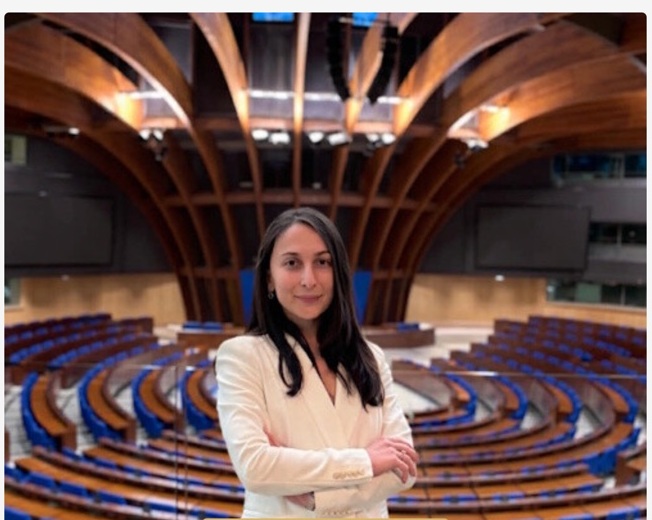
Nino Tatoshvili
Civil, family, administrative and business matters, including property and cross-border instructions.
View profile →
Nino Lipartia
Legal advice, dispute work and academically grounded analysis of Georgian private and business law.
View profile →
Tornike Chikovani
Criminal defence, investigations, procedural representation and court work in Georgia.
View profile →A legal team built around the matter
Our lawyers work with individuals, entrepreneurs and companies whose matters require a practical understanding of Georgian law and procedure. Some instructions are narrow — reviewing a contract, preparing a notice, checking a registry issue or advising on one procedural step. Others develop into negotiations, litigation or ongoing business support. In each case, the work should be organized around the matter itself rather than around a generic package.
The person responsible for the file needs to understand both the legal issue and the client’s objective. Where the problem overlaps several legal fields, we coordinate that analysis rather than sending the client from one service page to another. This is especially important in shareholder conflicts, property disputes, family matters involving assets, and cases in which administrative or criminal issues arise alongside a private-law dispute.
What clients should expect from their lawyer
A lawyer should first identify what is known and what still needs to be established. That includes the chronology, documents, parties, deadlines, jurisdiction and the legal remedy the client is actually seeking. Good advocacy begins before a pleading is written: it begins with disciplined fact gathering and an honest assessment of the strong and weak points of the position.
Clients should also expect communication that is understandable. Georgian legal terminology and procedure can be unfamiliar even to local clients, and for a foreign client the gap can be greater. We explain the practical meaning of each significant step, not only the legal label attached to it.
Working with evidence and documents
Legal disputes are decided on more than a client’s recollection of events. Contracts, messages, registry extracts, invoices, bank records, official acts, expert materials and procedural documents may determine what can be proved. We therefore encourage clients to preserve originals, avoid altering files, and provide documents in a coherent way from the beginning.
Where a document is in another language or must be used before a Georgian institution, translation and formalization requirements should be checked early. The same applies to foreign corporate documents, powers of attorney, civil-status records and other materials that may require notarization, apostille, legalization or a certified translation.
Representation is not a promise of outcome
The lawyer controls preparation, legal analysis and the quality of the work within the agreed scope. The lawyer does not control the opposing party, a witness, a public authority or a court. For that reason, we do not present legal representation as a guaranteed result. We instead explain the available routes, the evidence, the principal risks and what can be done to strengthen the client’s position.
This distinction is important for trust. A realistic assessment at the beginning allows the client to choose between negotiation, litigation, a transaction, a defensive step or no action at all with a clearer understanding of cost and consequence.
How we approach the matter
Legal work is most useful when the facts, the legal rule and the practical objective are examined together. At the beginning of a matter we establish a chronology, identify the parties and decision-makers, review the documents already available and check whether any court, administrative, contractual or limitation deadline is running. We separate confirmed facts from assumptions and from points that still require evidence. This makes it possible to define what must be proved, which document is missing and what action should come next.
We also look beyond the first letter, claim or hearing. A good legal position should remain workable if negotiations fail, if the other party changes its position, if an authority refuses an application or if the dispute moves to another stage. Depending on the matter, the plan may involve correspondence, negotiation, a formal demand, an administrative application, interim protection, a court claim, an appeal or enforcement. The purpose is not to create more procedure than necessary, but to select a route that can realistically serve the client's objective.
Communication is kept practical. After a material development, the client should understand what happened, what it means and what decision is required. We do not promise outcomes controlled by a court, investigative authority, registry, bank, regulator or another party. Our responsibility is to prepare the legal position carefully, manage deadlines, draft accurately and represent the client's interests professionally.
When to involve a lawyer
Early legal review usually creates more options. Before signing a contract, transferring property, accepting a settlement, responding to an official notice or taking a position in a dispute, it may still be possible to change wording, preserve evidence, clarify authority, negotiate security or choose a more effective procedure. Once a deadline has expired or a transaction has been completed, the available remedies can become narrower and more expensive.
A matter can still be improved after a dispute has started. The first task is then to identify the procedural position: what has already been filed, which evidence is in the record, whether a response or appeal deadline is pending and what can still be obtained. In urgent matters — including detention, imminent hearings, rapidly changing property status or short appeal periods — the timing of legal advice is itself part of the strategy.
Preparing for the first consultation
A concise chronology is one of the most useful documents a client can prepare. List the important dates, the people or companies involved, what happened and what result you want. Attach or identify the main contract, court document, administrative act, registry extract, payment evidence or correspondence. If the file is large, a document index is often more helpful than sending an unstructured archive.
Do not delete or alter potential evidence. Emails, messages, contract versions, bank transfers, registry records, photographs and other material may later become relevant even if they do not appear important at first. If you are unsure what matters legally, it is better to preserve the material and review it together with counsel.
Finally, tell us your practical priority. For one client speed is decisive; for another it is financial recovery, confidentiality, preserving a commercial relationship or securing a long-term position. The same legal problem may have several lawful routes, and the right choice depends not only on the legal rule but also on the result that is valuable to the client.